
Commercial
Fit-out payment terms in NSW: progress claims, deposits and the Security of Payment Act
How progress claims, deposits and the NSW Security of Payment Act work on a commercial fit-out, and what to put in the contract before work starts.
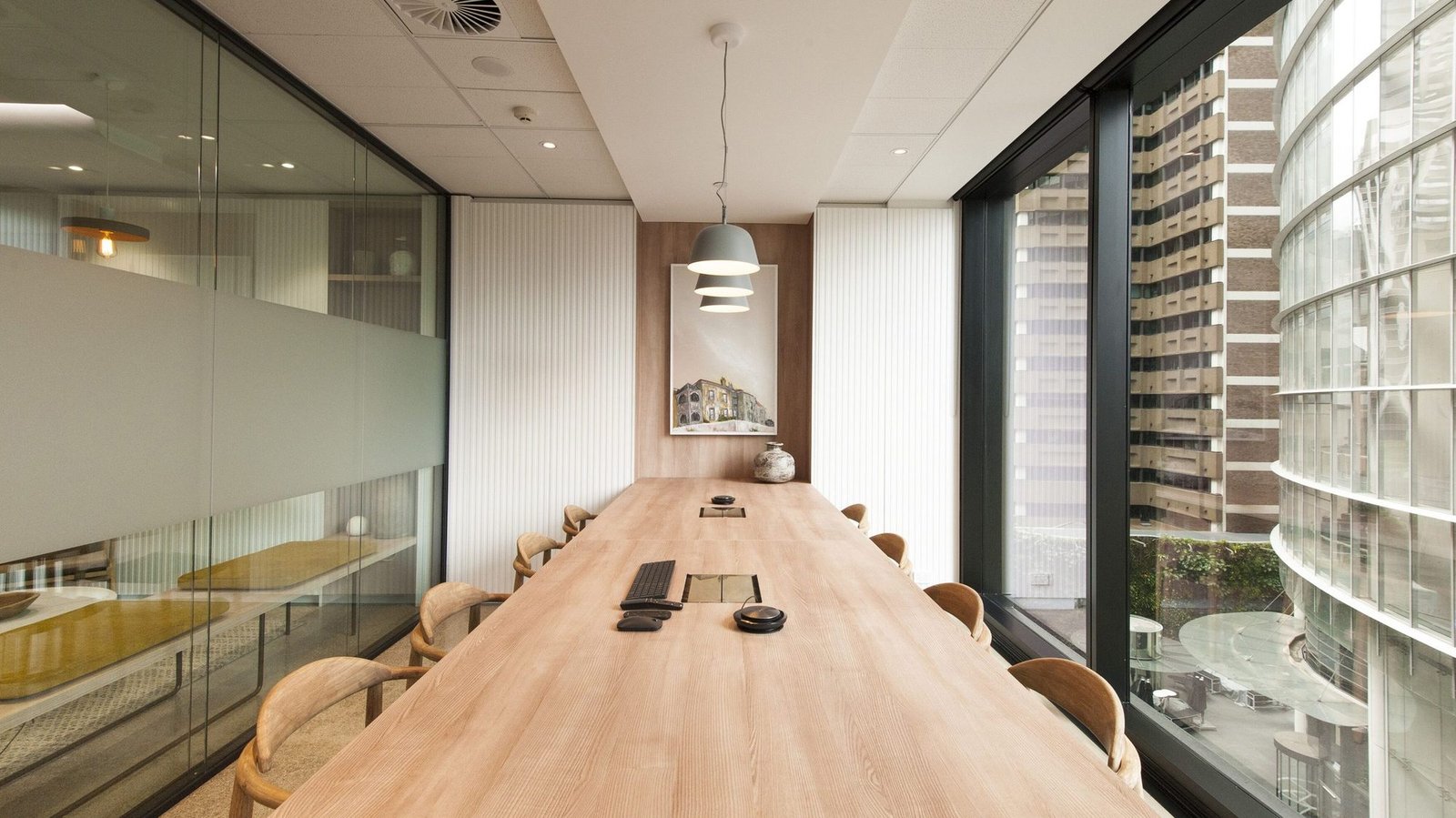
Bligh Street office boardroom — Laidre commercial fit-out, Sydney CBD
A commercial fit-out in NSW is usually paid in stages: a deposit or mobilisation payment, progress claims as work is done, then a final claim at practical completion. The Building and Construction Industry Security of Payment Act 1999 sits behind that schedule and sets maximum times for paying a valid progress claim.
Laidre has delivered offices, restaurants, bars, gyms, shops and aged care and retirement living work across Sydney since 2010, from Bligh Street and Martin Place in the CBD to Woolwich, Alexandria, Balmain and Brookvale. This guide explains how payment claims work under NSW law, what a fair schedule looks like, and what to check before you sign.
Should you pay a fit-out contractor 50% upfront?
Usually no. Half the contract sum before demolition starts leaves you carrying more risk than the builder. If the job slows, materials are late or the relationship breaks down, a large upfront payment is hard to recover.
A safer commercial pattern is:
- a deposit or mobilisation payment large enough to cover early costs such as site setup, long-lead orders and insurance, but not so large that most of the job is prepaid
- progress claims tied to work actually done, or to clear milestones in the program
- a final claim at practical completion, with any retention released under the contract
Exact percentages are negotiated. What matters is that the schedule is written into the contract, that each claim says what it covers, and that unpaid work can be valued if the parties disagree. Our guide to commercial fit-outs in Sydney covers the steps before work starts, including locking the commercial terms.
What payment schedule should you use for a fit-out?
Write the money rules down before anyone mobilises. A clear schedule usually covers:
- When claims can be made. Monthly, or on named milestones such as demolition complete, services rough-in, or practical completion.
- What each claim includes. Labour, materials on site, approved variations, and any retention being claimed for release.
- How variations are priced. Unit rates, a valuation method, or a written quote before the change is instructed.
- Retention or security. How much is held, when it is released, and whether bank guarantees are used instead of cash retention.
- Due dates. The calendar in the contract, checked against the Act's maximums below.
On staged jobs the claim dates need to match the program. At 25 Martin Place, Laidre delivered a $3.7 million food court upgrade for Dexus as design and construct, and a separate $1.6 million amenities upgrade, both inside a building that stayed open. Work like that is claimed as stages finish, not as one lump sum at the end. If you want one team to own design, budget and build, that is how design and construct is set up.
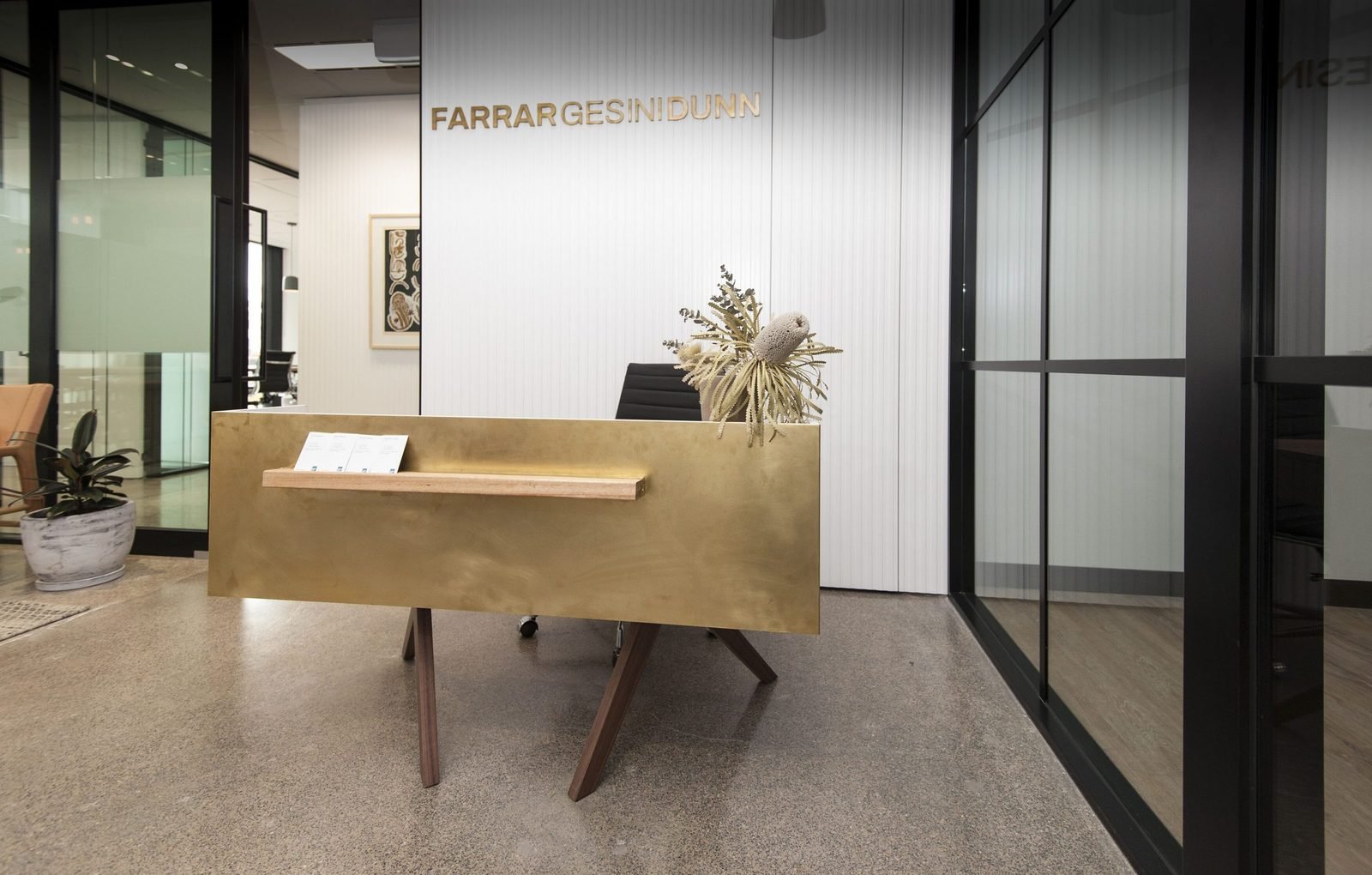
Bligh Street reception — brass desk and client signage
What is the NSW Security of Payment Act?
It is the Building and Construction Industry Security of Payment Act 1999. NSW Government guidance is published by Building Commission NSW under Security of payment.
In short, the Act:
- gives a person who carries out construction work, or who supplies related goods or services, a right to a progress payment
- applies whether the contract is written, verbal or absent, and even if the contract says progress payments are not allowed
- sets out how to make a payment claim, how to respond with a payment schedule, and how to take an unpaid claim to adjudication
Commercial fit-outs, including offices, shops, restaurants and bars, sit inside that framework when the work is construction work under a construction contract in NSW.
How do progress claims work under the Act?
A payment claim is a written claim for a progress payment. Under section 13 of the Act, and as summarised on the NSW Government making a payment claim page, a claim must:
- identify the construction work, or related goods or services, that the claim relates to
- indicate the amount claimed
- be served on the person who is or may be liable to pay
Unless the contract sets an earlier date in the month, a claim may be served on and from the last day of each named month in which the work was carried out. Except as the contract provides, only one claim may be served in any particular named month for that work. A claim can generally be served within the period in the contract or within 12 months after the work was last carried out, whichever is later.
When a head contractor serves a payment claim on a principal, the Act also requires a supporting statement declaring that subcontractors have been paid for the work covered by the claim. Knowingly giving a false or misleading supporting statement is a serious offence.
How quickly must a claim be paid?
Section 11 of the Act sets maximum due dates for non-residential construction contracts. A contract may set an earlier date, but not a later one:
- Principal to head contractor: 15 business days after a payment claim is made
- Head contractor to subcontractor: 20 business days after a payment claim is made
If you are the client engaging a head contractor for a commercial fit-out, the 15-business-day maximum is the one that usually applies to your progress payments under the Act, unless your contract pays earlier.
What if you disagree with a claim?
You respond with a payment schedule. Under section 14, and as explained on the NSW Government responding to a payment claim page, a payment schedule must:
- be in writing
- identify the payment claim it relates to
- state the amount you propose to pay, which can be nil
- state the reasons if that amount is less than the claimed amount
- reach the claimant within 10 business days after the claim was received
If you do not serve a payment schedule in time and you do not pay by the due date, you can become liable for the whole claimed amount. The claimant may then recover that amount as a debt or apply for adjudication, and may give notice of intention to suspend work. Adjudication timelines are strict; the NSW Government summarises them on its applying for adjudication page.
On occupied sites, cash flow and access are tied together. On our office fit-out for RP Infrastructure on Level 9, 20 Bond Street, the client's team kept working in existing office areas, so noisy and disruptive trades were booked for weekends or before 8am. Staging like that only works when claims, variations and access are agreed in writing as the job moves.
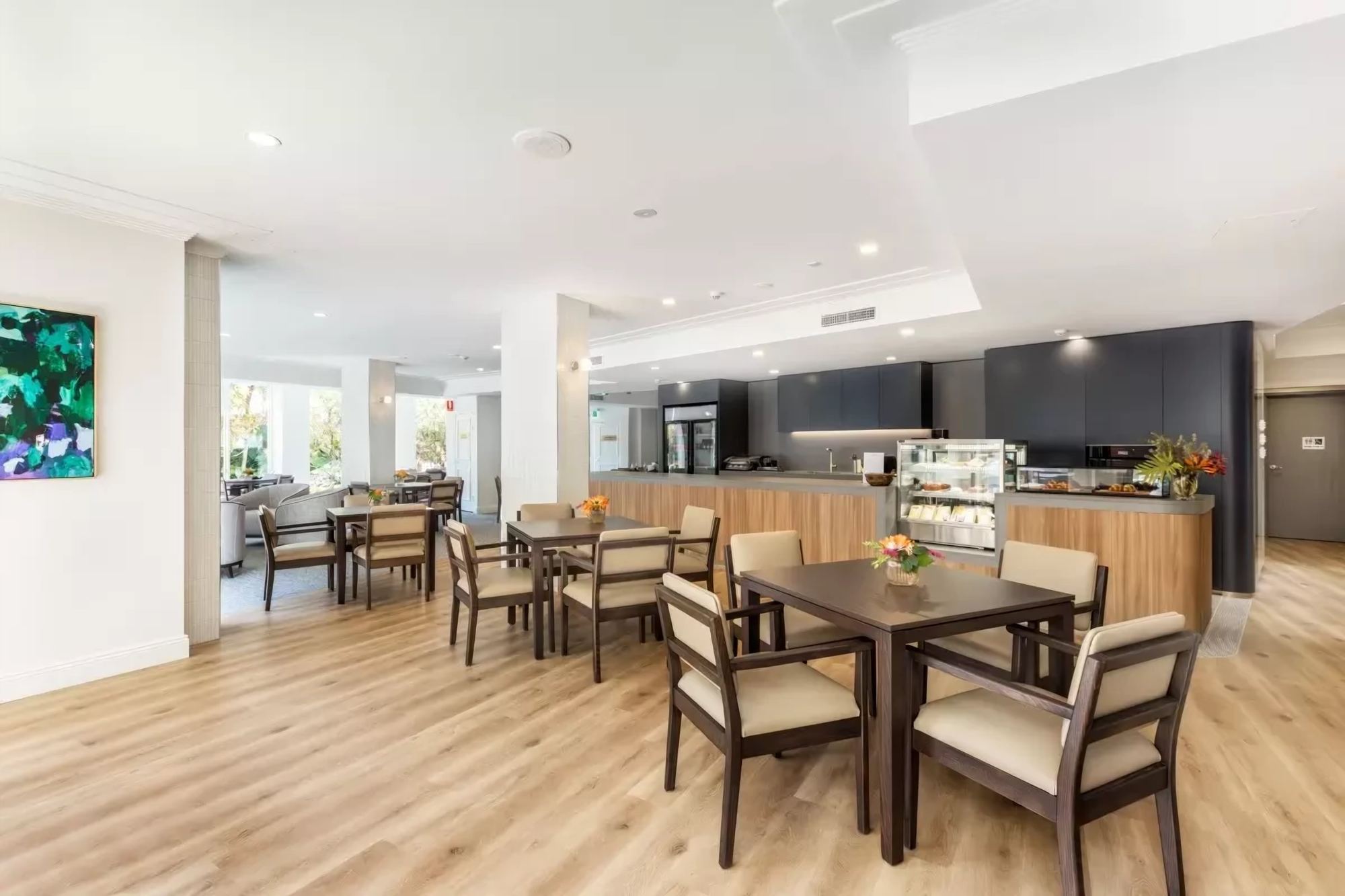
Aveo Manors of Mosman community café after Laidre's refurbishment
What should you check before you sign?
- The deposit size and what it covers
- Claim dates and what evidence sits behind each claim
- Variation pricing and approval steps
- Retention or security release dates
- That contractual payment times are no slower than the Act allows
- Who holds the supporting-statement obligation if subcontractors are on the job
If you are improving a space you already occupy, the commercial terms can look different from a new empty tenancy. See office fit-out or refurbishment and planning works in an occupied building.
Talk through the payment schedule for your job
Send us the floor area, the plans and your timing, and talk to Dylan, Matt or Neil about a contract and payment schedule that fits the work. You can also see our commercial and hospitality work.
This article is general information about NSW payment practice and the Security of Payment Act. It is not legal advice. Contracts and facts differ, and you should get advice on your own position.
Questions people ask
Should I pay a fit-out contractor 50% upfront in NSW?
Usually no. A commercial fit-out is safer when most of the money follows work done: a modest deposit or mobilisation payment, then progress claims as stages finish, then a final claim at practical completion. Paying half before work starts shifts risk onto you if the job slows or stops.
What payment schedule should I use for a commercial fit-out?
Agree the deposit, claim dates, what each claim covers, how variations are valued, and when retention is released, then write it into the contract. In NSW, the Building and Construction Industry Security of Payment Act 1999 also sets maximum times for paying a valid progress claim, and your contract can only make those times shorter, not longer.
What is the Security of Payment Act in NSW?
It is the Building and Construction Industry Security of Payment Act 1999. It gives people who do construction work, or supply related goods or services, a statutory right to progress payments and a fast way to recover unpaid amounts through payment claims, payment schedules and adjudication.
How often can a builder make a progress claim in NSW?
Unless the contract says otherwise, a payment claim can be served on and from the last day of each named month in which work was carried out. The contract can set an earlier date in the month. Only one claim can be served in a particular named month for that work, unless the contract allows more.
How quickly must a progress claim be paid under the Act?
For non-residential work, a progress payment from a principal to a head contractor is due 15 business days after a payment claim is made, and a payment to a subcontractor is due 20 business days after the claim, unless the contract sets an earlier date. A contract cannot extend those maximums.
What happens if I ignore a payment claim?
If you do not serve a payment schedule within 10 business days and you do not pay by the due date, you can become liable for the full claimed amount. The claimant may then go to court or adjudication, and can give notice to suspend work. Get advice early if a claim arrives.
Commercial & hospitality
Dylan, Matt or Neil can talk through your plans, timing and scope.
Related projects
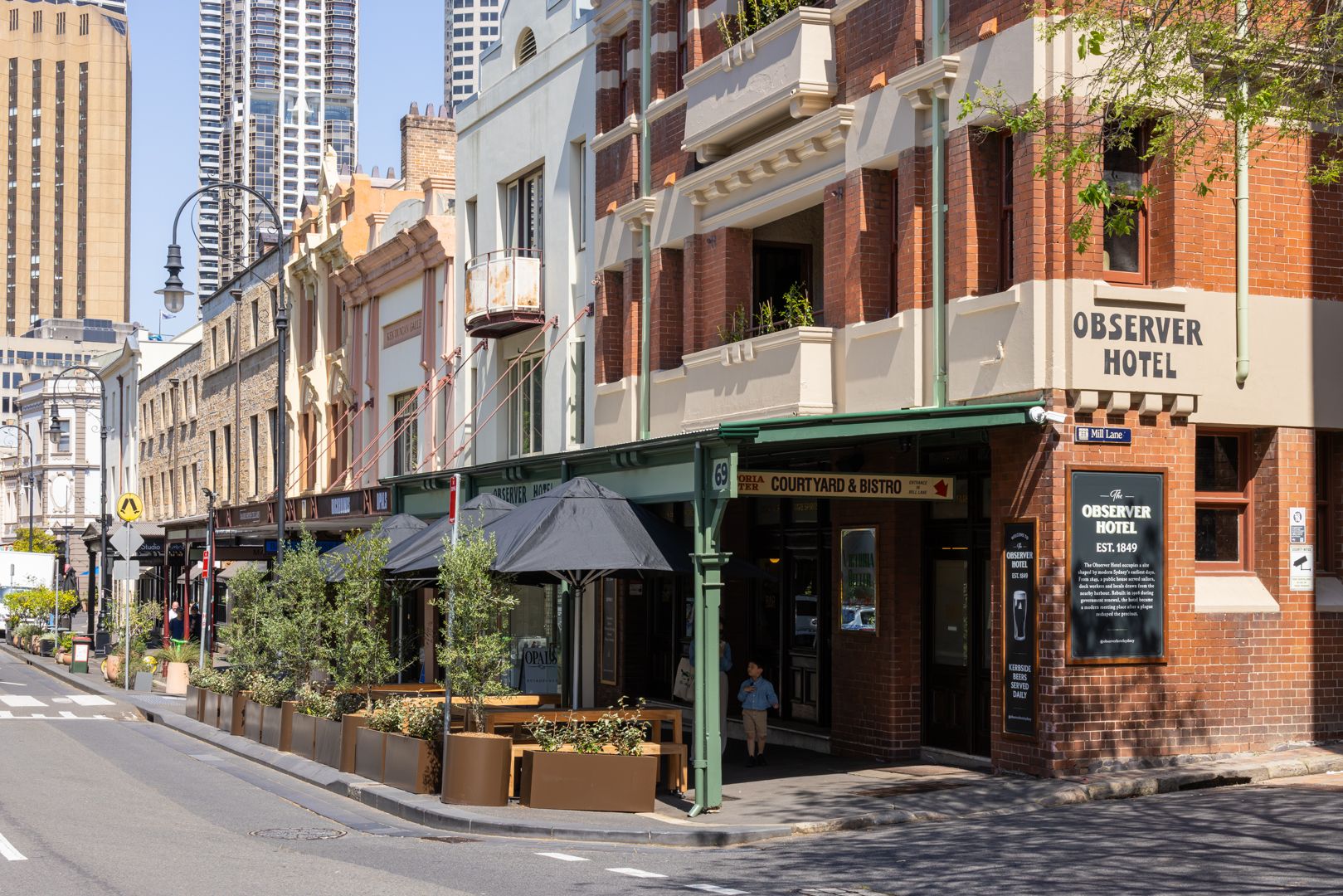
Photo: Kitti Gould
The Observer Hotel, The Rocks
Barrelhouse Group
69 George Street, The Rocks NSWHeritage and building restoration

Bucketty's Brewing Co., Brookvale
Bucketty's Brewing Co.
26 Orchard Road, Brookvale NSWDesign and construct